EEGBCI technology
What Is a BCI?
Could brain signals be artificial intelligence’s next big data source? We explore the role of BCI technology and EEG data in training AI, the future of Neuro-AI research and g.tec’s position in the field.
What Is a Brain–Computer Interface (BCI)?
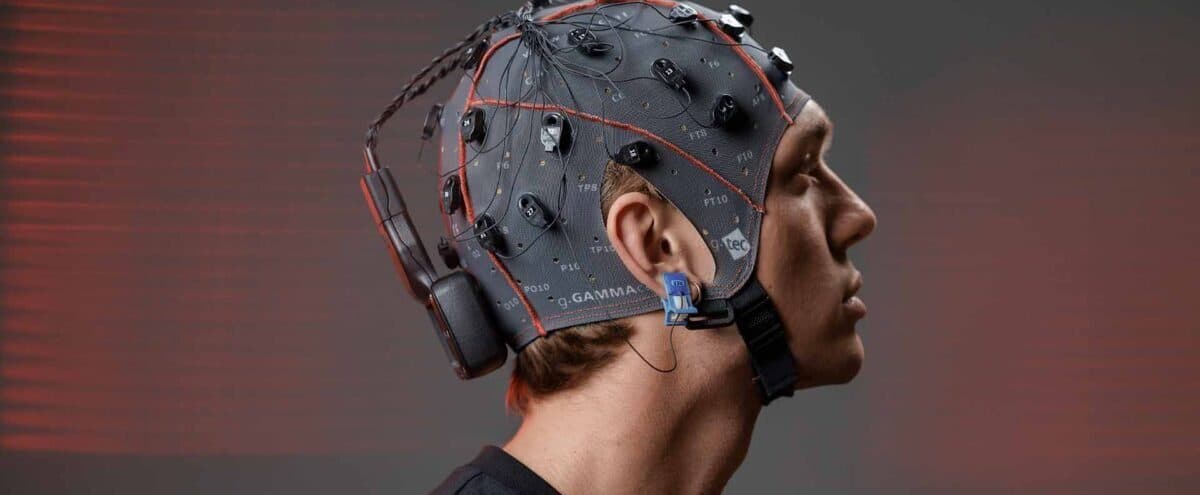
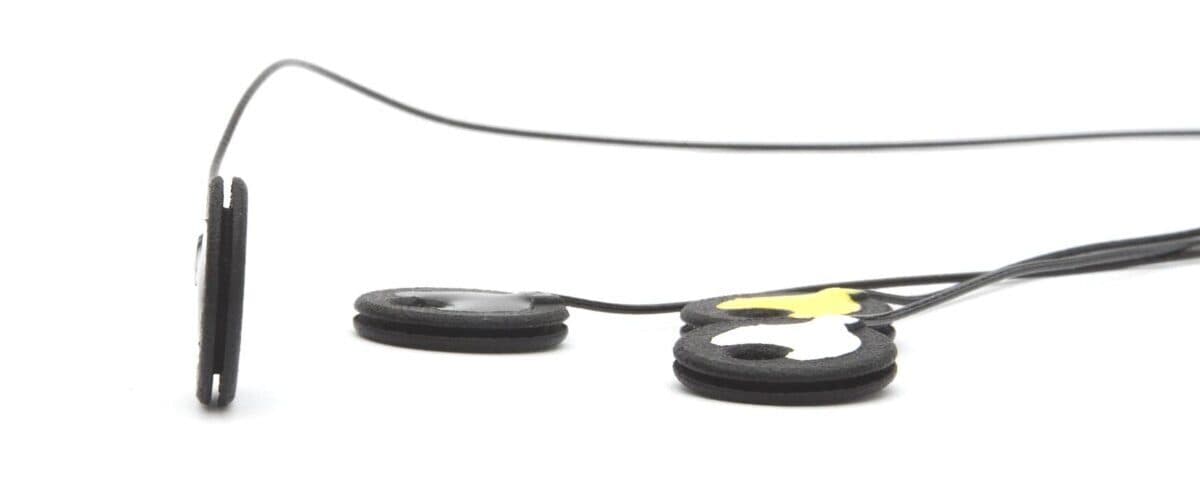
A brain–computer interface (BCI) is a technology that establishes direct communication between neural activity and an external device or computing system. These systems consist of signal acquisition hardware, real-time signal processing, feature extraction and machine learning algorithms that turn neural activity into concrete outputs.
Many BCIs work in an online, closed-loop set-up: decoded brain signals are fed back in real time to the user or to an adaptive system, which makes mutual adaptation between the human brain and the algorithm possible. Besides neuroscience, neurorehabilitation and assistive technologies, BCI technology is now increasingly used in artificial intelligence research as well. Here, brain signals serve as a physiologically grounded input for human-in-the-loop and adaptive AI systems.
Why Does Artificial Intelligence Need Brain Data?
Most of today’s artificial intelligence systems are trained on text, images, clicks and labels. These signals are indirect and delayed, far removed from real cognitive processes. From the perspective of biomedical engineering and BCI research, most contemporary AI systems rely on indirect behavioural latent variables, such as button presses, reaction times or subjective labels, to infer human state and intent. Functional as these signals are, they are delayed effects of neural processing and lack temporal precision, physiological grounding and explanatory power.
EEG signals, by contrast, give direct access to the neural dynamics underlying perception, cognition and motor control, allowing AI models to work much closer to the source of human information processing. Brain signals capture continuous neural responses relating to variables such as attention, cognitive load, error perception, learning and intent, which cannot be measured reliably by observing behaviour alone.
Key Gains in BCI and Neuro-AI Research
- Closed-loop learning
- AI systems adapt in real time to neural feedback instead of delayed behavioural outcomes.
- Human-in-the-loop AI
- Implicit brain responses (error potentials, markers of cognitive load) guide model optimisation.
- Neural-level model validation
- Assessing whether AI decisions are aligned with human cognition.
- Improved generalisation
- Physiological constraints and the variability of human states are included in the training data.
Integrating brain data into AI pipelines in biomedical applications is paving the way for more robust, interpretable and adaptive systems, particularly in neurorehabilitation, assistive technologies and cognitive monitoring. Rather than replacing conventional machine learning approaches, neural data complements them: by adding a biologically grounded feedback channel, it turns brain–computer interfaces into a core sensing modality for next-generation AI systems.
How Is EEG Data Used in Artificial Intelligence and Machine Learning?
EEG data can be integrated into AI pipelines in several ways:
- Training machine learning models on real neural signals
- Adapting AI behaviour to cognitive state
- Validating AI decisions against brain responses
- Building multimodal AI by combining EEG with vision, audio or text
Modern BCIs stream EEG data in real time, which makes them ideal for online AI training and inference.
Which BCI Providers Are Used in Research?
Several BCI providers offer EEG-based systems for research; however, thanks to its long-standing focus on research-grade signal quality, real-time processing and experimental flexibility, g.tec medical engineering is particularly well placed for academic and applied BCI research.
g.tec systems are widely used in neuroscience and biomedical engineering laboratories because they support custom experimental designs, precise timing and closed-loop operation. All of these are critical requirements for BCI experiments and AI-driven neuroscience applications.
g.tec also offers an integrated ecosystem that brings together high-performance EEG hardware, real-time signal processing software and developer-oriented interfaces, enabling seamless integration with machine learning and Neuro-AI pipelines.
BCIs as Artificial Intelligence Sensors
In the context of AI, BCIs are best regarded not as medical devices but as high-bandwidth human sensors. g.tec systems are used to acquire and stream high-quality EEG data in real time, so that AI systems can integrate neural signals as an additional sensing modality alongside vision, audio or behavioural data.
These systems allow AI to:
- Observe cognitive responses such as attention, cognitive load and error perception directly at the neural level
- Adapt model behaviour to continuous brain activity instead of delayed behavioural feedback
- Put closed-loop, human-in-the-loop learning into practice, with neural signals guiding real-time model updates
This makes g.tec’s brain–computer interface systems a key technology for next-generation, human-centred artificial intelligence.
The Future of Neuro-AI
As AI systems move towards greater autonomy and personalisation, direct and physiologically grounded human feedback will become ever more critical. Brain–computer interfaces and EEG-based AI systems make possible:
- More transparent AI behaviour
- Safer human–AI interaction
- Deeper integration of human cognition into AI training
In this context, g.tec medical engineering systems stand as research-grade Neuro-AI infrastructure, providing the signal quality and real-time capabilities needed to develop and evaluate adaptive, human-centred AI systems. Their widespread use in neuroscience, biomedical engineering and clinical research shows that Neuro-AI is already being applied in real-world settings.