EEGNeuroscience Research
Unlocking the Power of Brain Activity in Microgravity with g.HIamp: the Airbus A330 Zero-G Flight
Studying brain activity in microgravity under extreme conditions is a critical area of research in neuroscience. Understanding how the human brain responds to microgravity can offer valuable insights into neural adaptability, cognitive function and human physiology in the space environment.
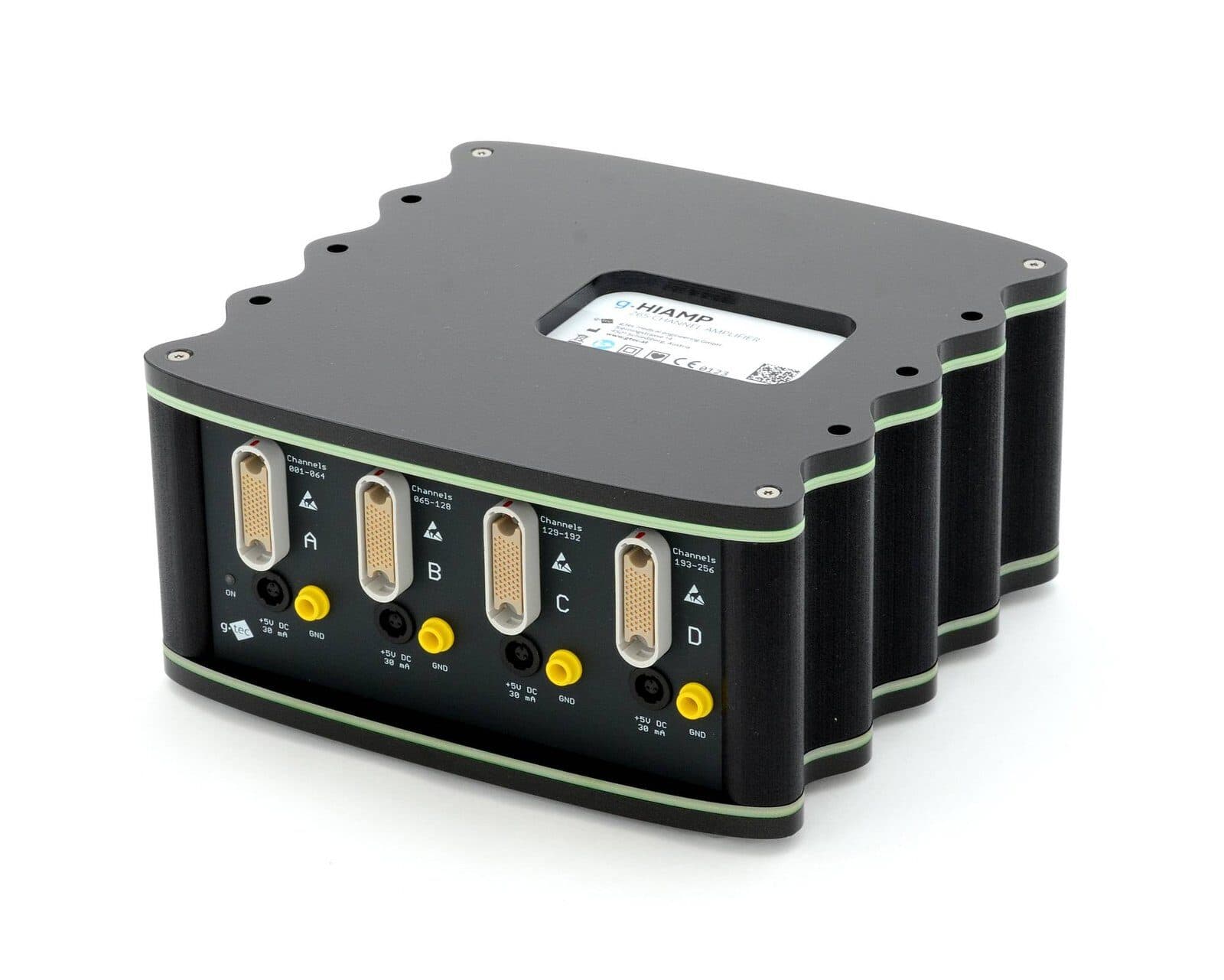
To this end, a team of researchers used g.tec’s state-of-the-art g.HIamp biosignal amplifier on an Airbus A330 Zero-G flight to record evoked potentials (EPs) in weightlessness.
The Technology Behind the Experiment
Conducting high-precision neurophysiological research in a microgravity environment requires sophisticated and reliable technology. For this experiment the researchers used the following systems:
- g.HIamp Biosignal Amplifier
- A high-performance EEG system designed to record brain activity in microgravity with outstanding accuracy.
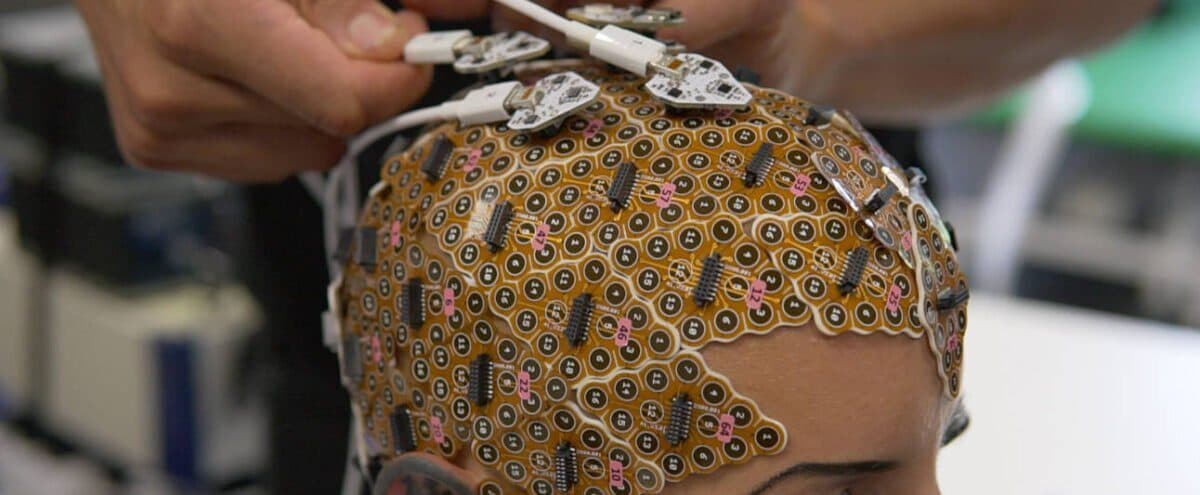
- 32 EEG Electrodes per Participant
- Used to measure the brain’s electrical activity and provide real-time insight into neural responses.
- 2 Electrocardiogram (ECG) Sensors
- Heart activity was monitored to assess physiological changes alongside the neural responses.
- g.TRIGbox
- A trigger device that precisely synchronises external stimuli with the recorded brain activity. It was connected to 2 push buttons (to generate ERPs) and 2 optical sensors (to detect visual stimuli).
OSCAR PRO and OSCAR LIVE — Advanced Artefact Removal
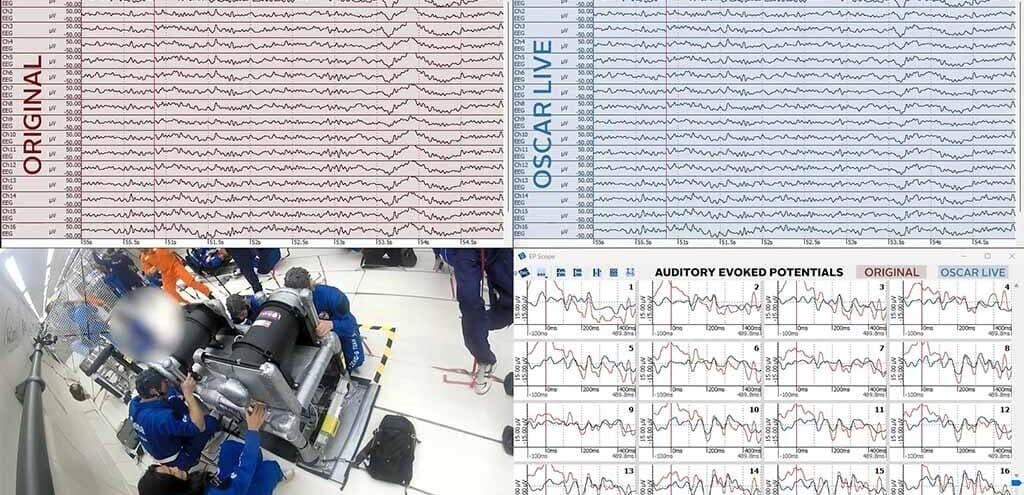
One of the most important features of this experiment was the use of OSCAR PRO and OSCAR LIVE for real-time artefact removal. Included in the new version of g.HIsys Professional, OSCAR LIVE lets researchers remove unwanted artefacts from biosignal recordings in real time, so cleaner data are collected.
g.HIsys Professional is integrated into g.tec Suite 2024 and is compatible with all g.tec amplifiers: it reads biosignals, performs signal processing and runs real-time experiments. Data are stored in MATLAB format and can be processed offline with g.BSanalyze.
The key advantage of this rapid prototyping environment is that new experiments can be set up in hours instead of months — which speeds up neuroscience research considerably. The package contains hundreds of functions designed specifically for BCI and neuroscience experiments and embodies g.tec’s 25 years of BCI experience.
These tools allowed the researchers to reliably collect clean, high-quality brain activity data even under the demanding conditions of a Zero-G flight.
Recording Evoked Potentials (EPs) in Microgravity
During the Airbus A330 parabolic flight, two participants were connected to the g.HIamp system, with a third person standing by as a reserve. The experiment aimed to analyse how microgravity affects evoked potentials, the brain responses triggered by sensory stimuli.
Despite initial concerns that motion sickness would affect the experiment, the unique environment of microgravity, in which objects and people float freely, allowed the system to remain stable and functional. The flight footage clearly shows the moment of zero gravity, when the crew members begin to float, lining up exactly with the evoked potential recordings. This demonstrates the outstanding precision and reliability of the g.tec system under extreme conditions.
Why Does It Matter for Neuroscience and Space Exploration?
Studying brain activity in microgravity has important implications for many fields and is also essential for understanding how long-duration space travel may affect brain function:
- Better Preparation for Astronauts
- Understanding cognitive changes in space can help develop countermeasures for long-duration missions.
- Advances in BCI Research
- Zero-G environments offer unique conditions for developing BCI applications for rehabilitation and communication.
- Medical Innovation on Earth
- Technology used in space-related neuroscience studies can be adapted to medical and assistive technologies to improve patient care.
Run Your Own Experiment with g.tec
For researchers who want to carry out similar studies, g.tec offers all the tools needed for high-quality brain research in any environment:
- g.HIamp
- A powerful biosignal amplifier that records EEG, ECG, EMG and other physiological signals at high resolution.
- g.TRIGbox
- Provides precise synchronisation between external events and biosignal recordings.
- g.HIsys
- An advanced EEG acquisition and rapid prototyping environment to speed up the development of real-time experiments.
Whether you are doing neuroscience research in space, in clinical settings or in cognitive research laboratories, g.tec offers reliable, high-performance technology to meet your experimental needs.
Conclusion
The Airbus A330 Zero-G flight experiment to analyse brain activity in microgravity with g.HIamp reveals the potential of using neurotechnology under extreme conditions. The ability to obtain clean evoked potentials in microgravity underlines the reliability of g.tec solutions and lays the groundwork for future neuroscience discoveries in space and beyond.