Skip to content
Application field · EEG and brain–computer interfaces

Robot Control

BCI · Neuroprosthetics · Exoskeletons

Control of exoskeletons, wheelchairs, robotic arms and drones with motor imagery, P300 and SSVEP paradigms. g.tec's BCI-robot integration.

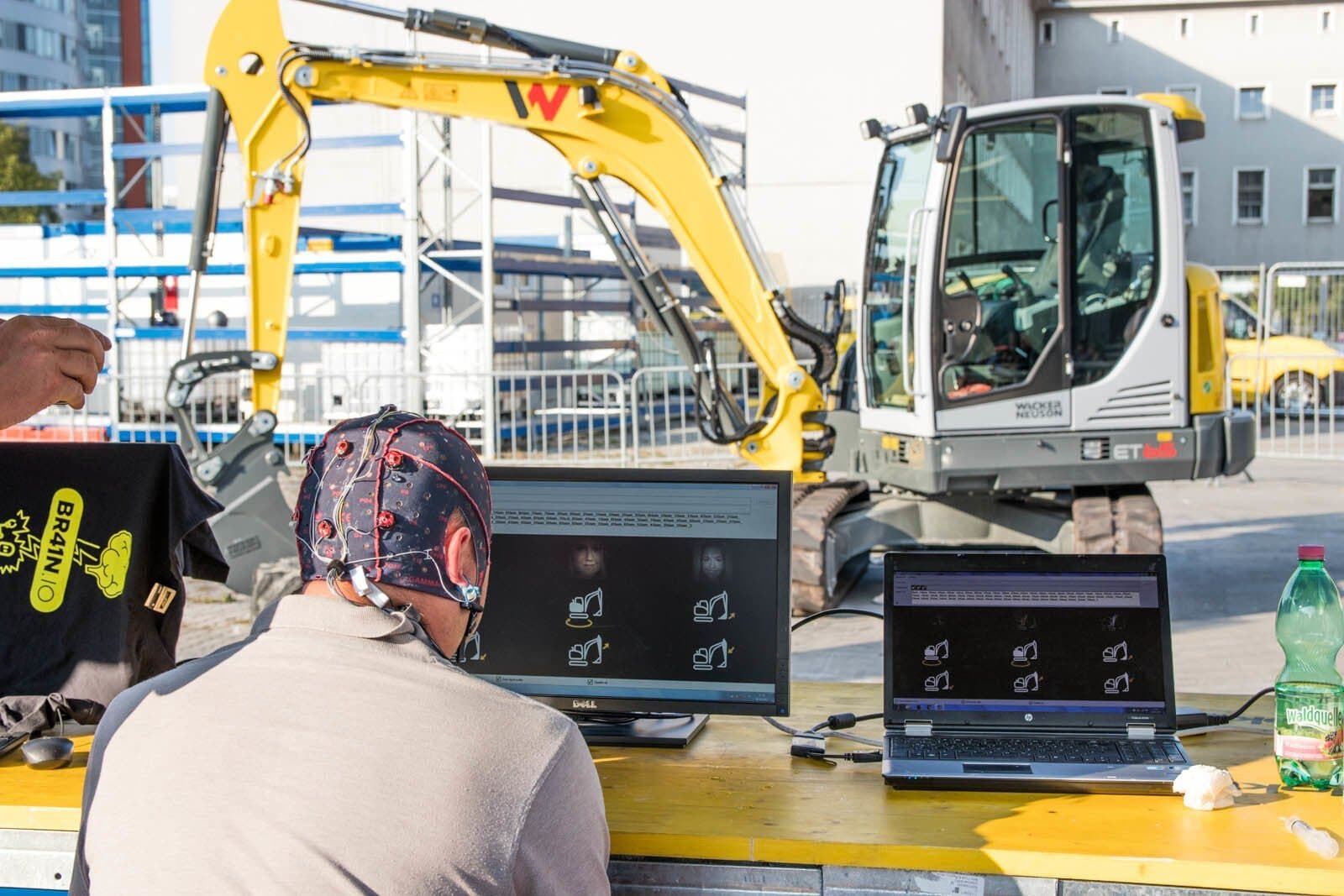
A man in an EEG cap controlling an excavator from laptops outdoors
Robot control with a BCI

The bridge between mind and machine.

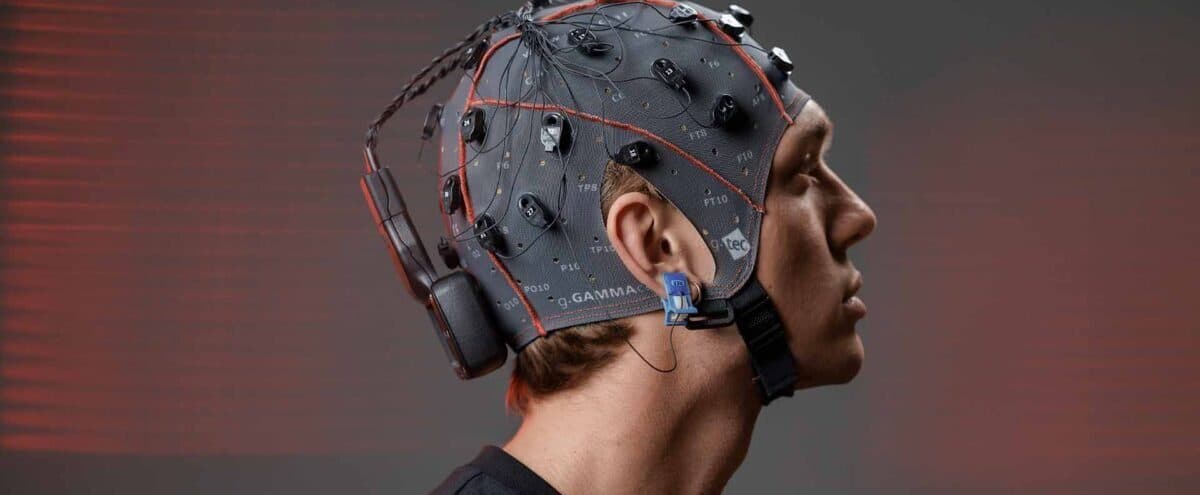
g.tec's BCI system supports robot control with three core paradigms: motor imagery (MI), P300 and SSVEP. Motor imagery stands out in exoskeleton and neuroprosthetic rehabilitation, cVEP (code-based BCI) in robotic systems that need continuous control, and SSVEP in applications that need a high information transfer rate.

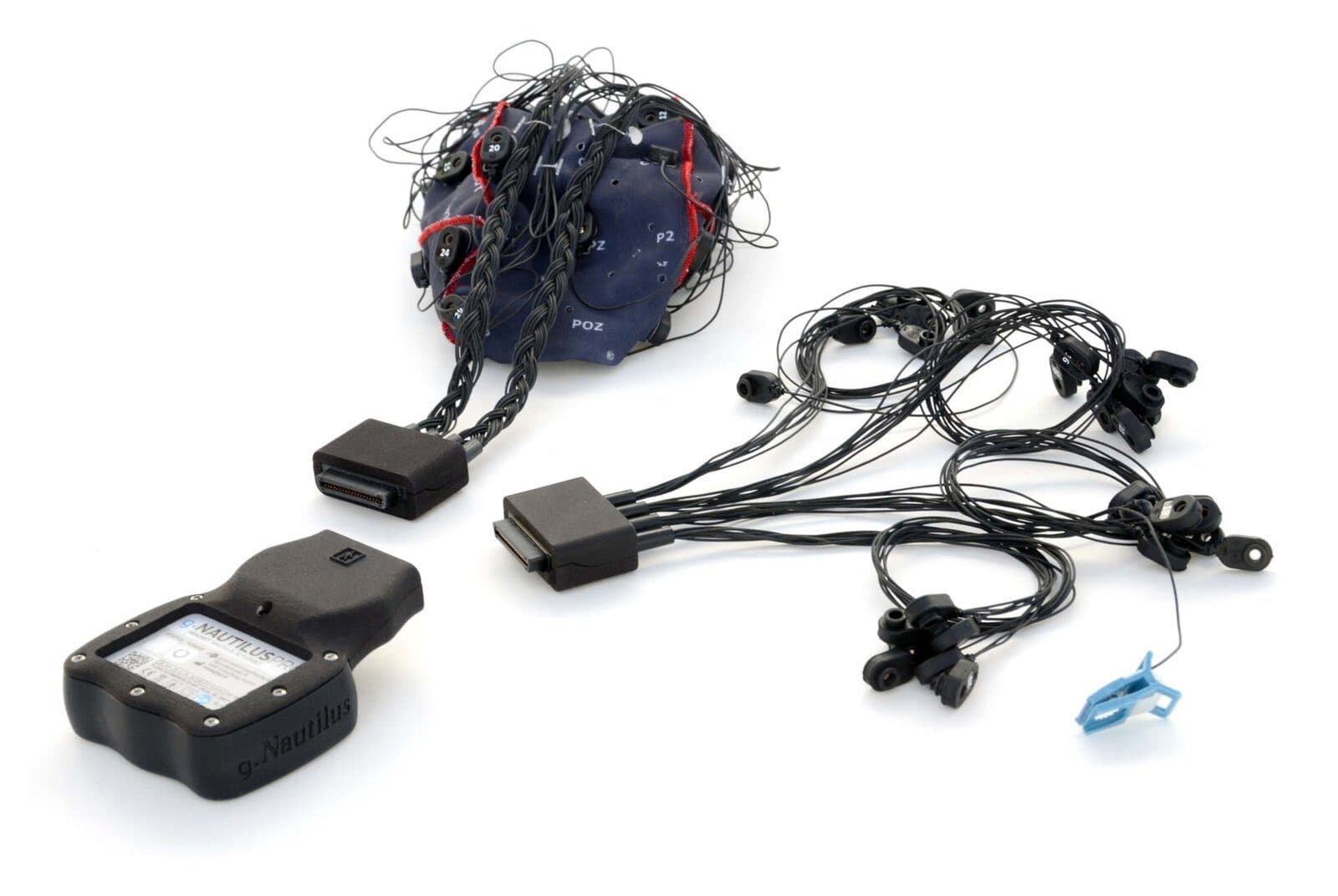
The 64-channel high-resolution g.Nautilus Research system controls an exoskeleton with motor imagery, P300 and SSVEP paradigms. Leading robotics researchers around the world use the g.tec platform, among them Hiroshi Ishiguro (Intelligent Robotics Laboratory, Japan).
Motor imagery and rehabilitation

Exoskeleton and neuroprosthetic control.

g.tec's motor imagery BCI system integrates directly with exoskeleton and orthosis control. While the user imagines moving the right or left hand, changes in the EEG mu/beta rhythms are classified with the CSP algorithm and turned into exoskeleton commands.

Combining a motor imagery BCI with FES (functional electrical stimulation) promotes Hebbian learning in stroke patients, increasing cortical plasticity and supporting functional recovery. Integrated with rehabilitation robots and neuroprosthetic devices, this closed-loop approach gives feedback in real time.

  • Motor Imagery CSP · FES · Exoskeleton
cVEP and continuous control

Controlling an excavator with code-based BCI.

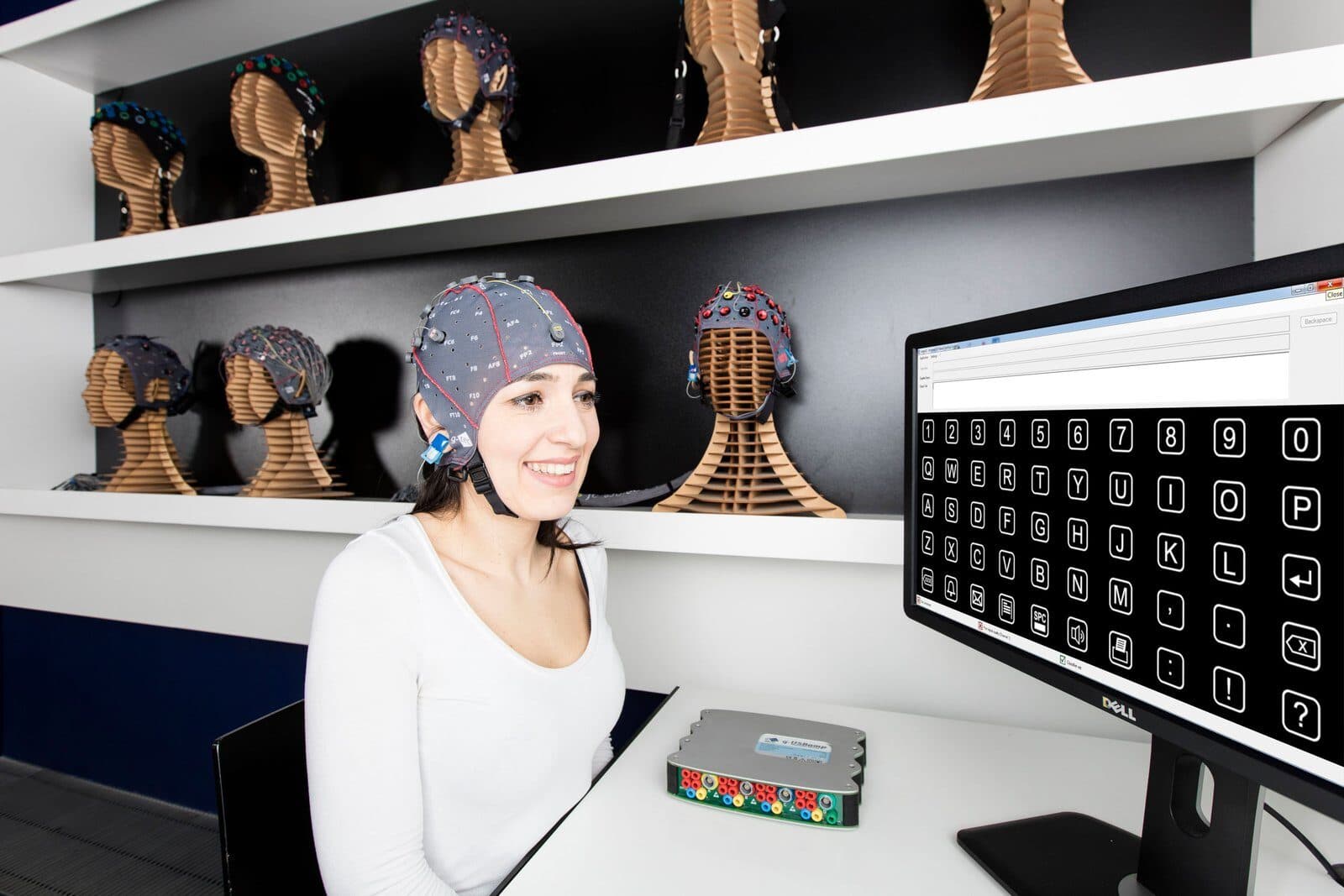
Code-based BCI (cVEP) uses pseudo-random stimulus sequences on screen to control robotic devices in real time. With very high online accuracy, the cVEP add-on toolbox for g.HIsys is ideal for applications that need a continuous control signal.

At the Ars Electronica Festival, a real excavator was controlled live with EEG signals on a g.tec cVEP system in front of thousands of visitors. Through the SOCI module, control icons can be integrated into external applications, Unity included.

  • cVEP Toolbox · SOCI · Unity
SSVEP and a high ITR

Controlling a hexapod robot with SSVEP.

An SSVEP-based BCI produces commands as the user looks at light sources flickering at different frequencies. When the user looks at one light, EEG activity over the occipital lobe rises at that frequency, and the algorithm detects which command to issue. With ITRs of up to 100 bits per second, it has the highest information transfer rate of all BCI paradigms.

At the Ars Electronica Festival, a hexapod robot was controlled with the SSVEP paradigm on a g.tec system. With zero-class support, the system also detects automatically when the user wants to give no command: a critical feature for robotic applications where safety matters.

  • SSVEP Toolbox · Zero-Class · 100 bit/s
Brain-controlled robots

Humanoid robot control.

Taking signals from the motor cortex, central and visual cortex regions, the 64-channel high-resolution EEG system produces the best control signal for each type of BCI. The high channel count is also used for spatial filtering, which raises control quality further.

Applied to humanoid robots, this approach lets the user steer the robot with mental commands while watching its camera view.

  • 64 channels · Motor cortex · Spatial filtering
Art and BCI

Drawing with the mind: a KUKA robot and BCI art.

The Serbian artist Dragan Ilic controlled a KUKA robot fitted with hundreds of pens through mental commands, using a g.Nautilus wireless EEG device. By choosing different drawing commands, he had the robot draw on wallpaper. Thousands of visitors watched the live demonstration at the Ars Electronica Festival.

The project shows how g.tec's robot control applications can be used in industrial and artistic settings.

  • g.Nautilus Research · Motor Imagery · P300 · SSVEP
Applications

Robot control scenarios with a BCI.

The main robot control and neuroprosthetics research you can run with g.tec's BCI systems.

Systems

The systems we recommend for this field.

Blog

Further reading

EEG and brain–computer interfaces
Contact

Let's build your robot control lab.

Our specialists will help you choose the right BCI system and paradigm for controlling an exoskeleton, a wheelchair, a robotic arm or a drone.

Request a quote

Call us +90 554 381 46 20Serving all of Türkiye · reply within 24 hours on working days