EEGBCI & art
BCI and Fashion
What happens when a dress moves with your brainwaves? In her third collaboration with g.tec, Anouk Wipprecht’s ScreenDress brings neurotechnology to the catwalk — and proves that the brain is not only a control centre but also a canvas.

Artistic BCI Meets Wearable Technology: Mind-Controlled Expression
Designed by Anouk Wipprecht, the ScreenDress is far more than a piece of fashion: it is a live image of the mind. Powered by g.tec’s Unicorn BCI Core-8 headset, the dress turns neural data into a dynamic visual experience. As brain–computer interfaces step out of the lab and into the real world, this design shows how technology and art can come together to create something unexpected and powerful.
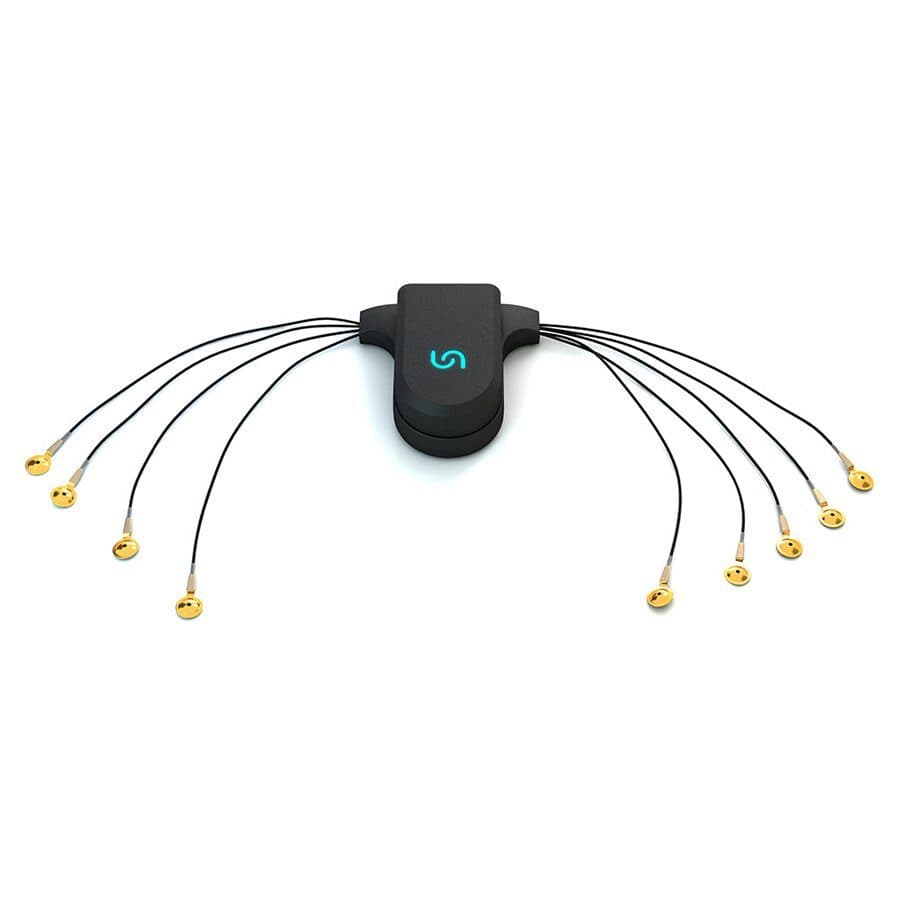
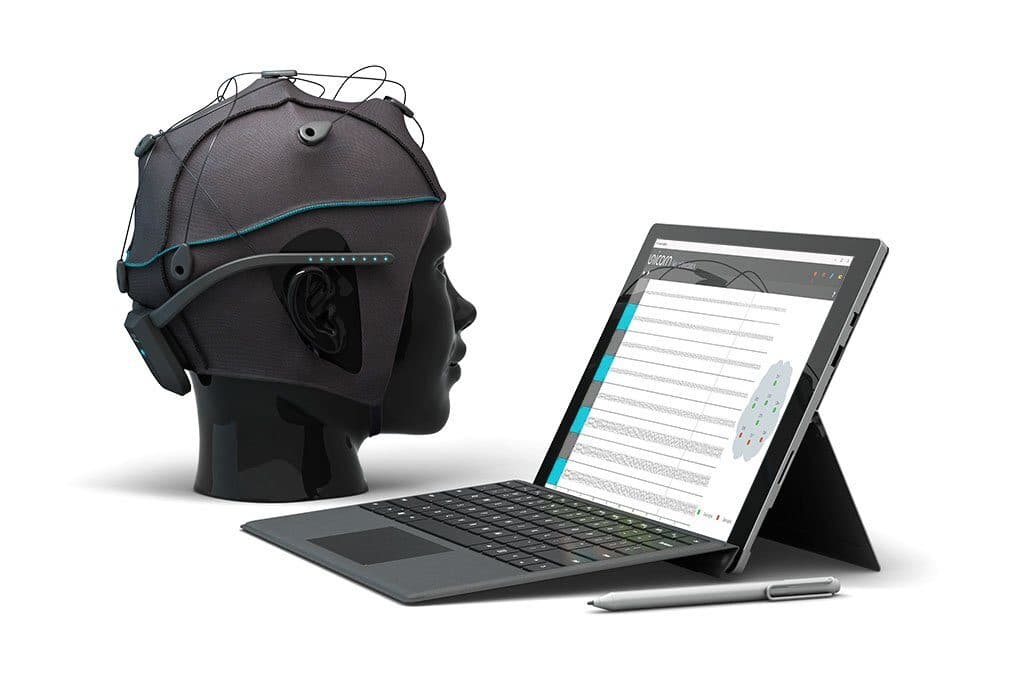
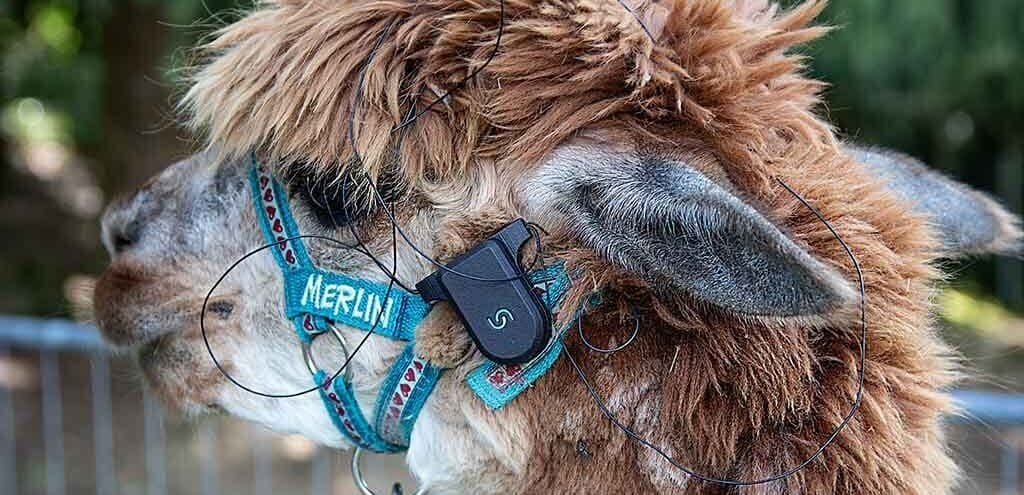
The Unicorn BCI Core-8 is a next-generation EEG device designed for continuous wireless brain recordings in both humans and animals. Thanks to its compact build, it can be mounted on various caps or headbands depending on the application. In this project, Anouk Wipprecht integrated the device into a custom-designed headband, turning advanced neurotechnology into a wearable fashion element.
The headset reads brain signals without gel or complicated set-up, which makes the system quick and accessible. These signals are then used to control visuals embedded in the fabric of the dress. As the brain state changes, the display responds in real time; neurotechnology and fashion merge in a way that is both functional and expressive.
The concept behind the dress is direct and clear: to visualise the wearer’s mental state. Focus, relaxation, cognitive load — each is translated into motion and imagery. The dress does not simply show light or animation; it shows you. Not decoration, but data-driven expression.
Anouk Wipprecht: Where Fashion Meets the Brain
Anouk Wipprecht is no stranger to such fusions. The Netherlands-based designer works at the edges of design, robotics and neuroscience. Every garment becomes a system — often robotic, always interactive. The ScreenDress marks the third collaboration between Wipprecht and g.tec.
First Collaboration: Agent Unicorn with Unicorn Hybrid Black
The partnership between Wipprecht and g.tec began with the creation of Agent Unicorn. Developed using the 8-channel EEG headset Unicorn Hybrid Black, the project was designed to help artists, developers and makers take BCI technology beyond traditional neuroscience labs.
Unicorn Hybrid Black supports the following BCI paradigms:
- Motor imagery
- Electrodes placed over the sensorimotor cortex to detect imagined movement
- P300
- Electrodes over central, parietal and occipital regions for stimulus-based response detection
- SSVEP and CVEP
- Electrodes focused on parietal areas for visually evoked potentials
Second Collaboration: Kinetic Couture with High-Density EEG
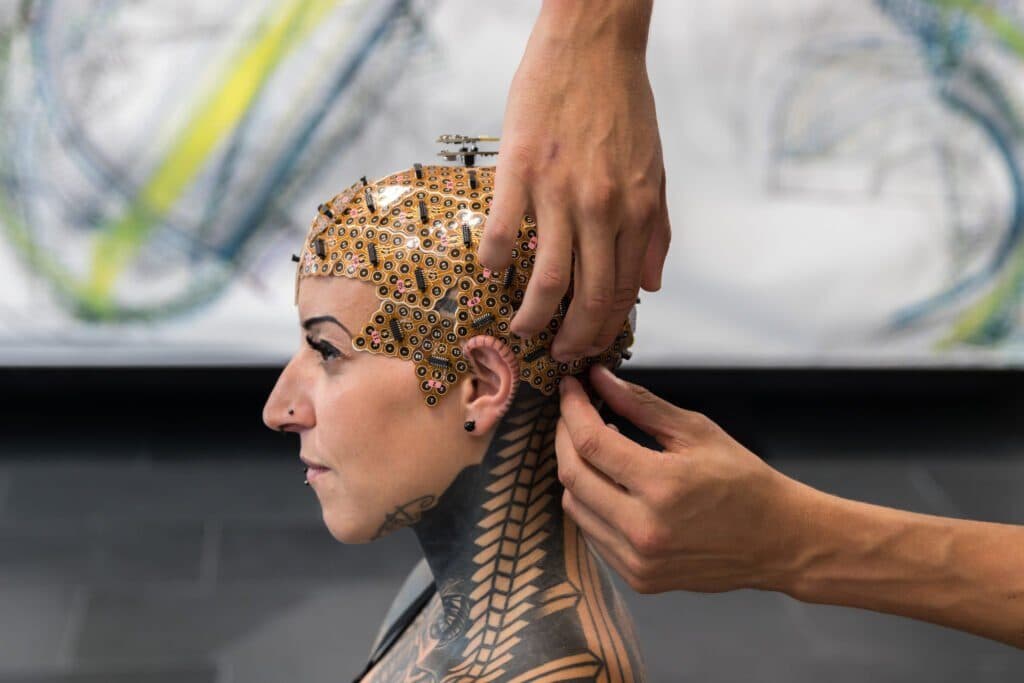
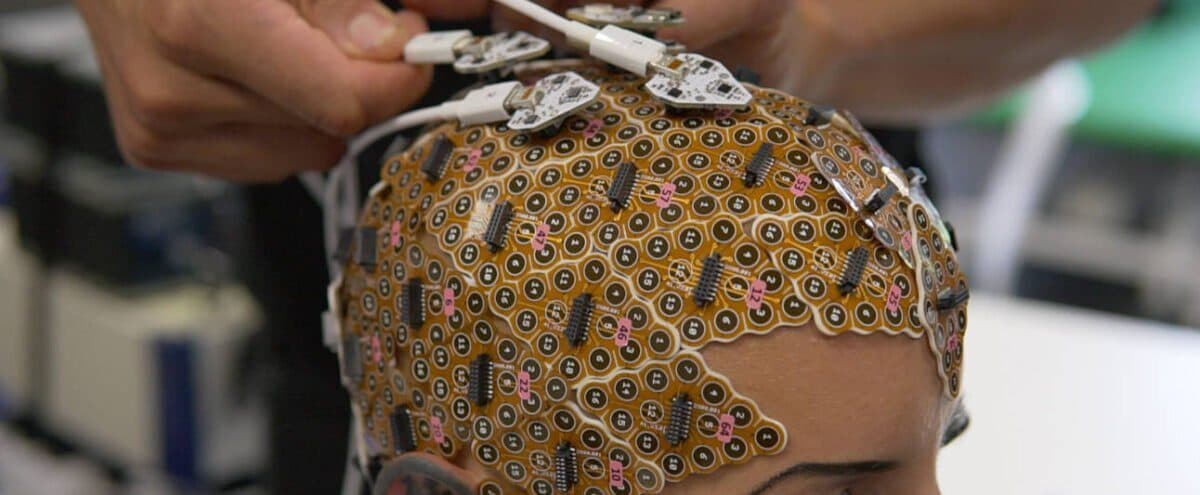
The Pangolin Dress, the second collaboration between g.tec and Anouk Wipprecht, used g.tec’s g.Pangolin system — the world’s first ultra-high-density electrode grid and biopotential amplifier. This technology was the key to creating a garment that responds physically to brain activity.
g.Pangolin uses active wet electrode technology to record high-resolution EEG, EMG, ECG or other biopotentials. Connected to g.HIamp, the system can record biosignals at sampling rates of up to 38,400 Hz per channel with 24-bit resolution.
In the Pangolin Dress, this data was turned into movement. As the wearer’s mental state changed, the dress’s scales opened and closed — mimicking a pangolin’s defensive behaviour, but directed by the brain. The set-up ran on g.HIsys, g.tec’s software environment, which can process up to 1,024 channels across four g.HIamp devices.
Why Does Collaborating with Artists Matter for BCI Development?
For g.tec, these collaborations are more than experimental: they are essential. Working with artists such as Wipprecht takes BCI technology into new areas such as interactive design, performance and public engagement. Artistic BCI projects like these bring out the expressive, emotional and even confrontational dimensions of neurotechnology.
The ScreenDress makes one thing clear: the brain is not only a control centre — it is also a canvas.