Skip to content
Application field · EEG and brain–computer interfaces

VR & EEG Research

Virtual reality · Embodiment · VR-BCI

EEG recording in virtual reality environments. g.tec's VR-EEG platform covers everything from embodiment, presence and VR-based BCI applications to neurorehabilitation and education.

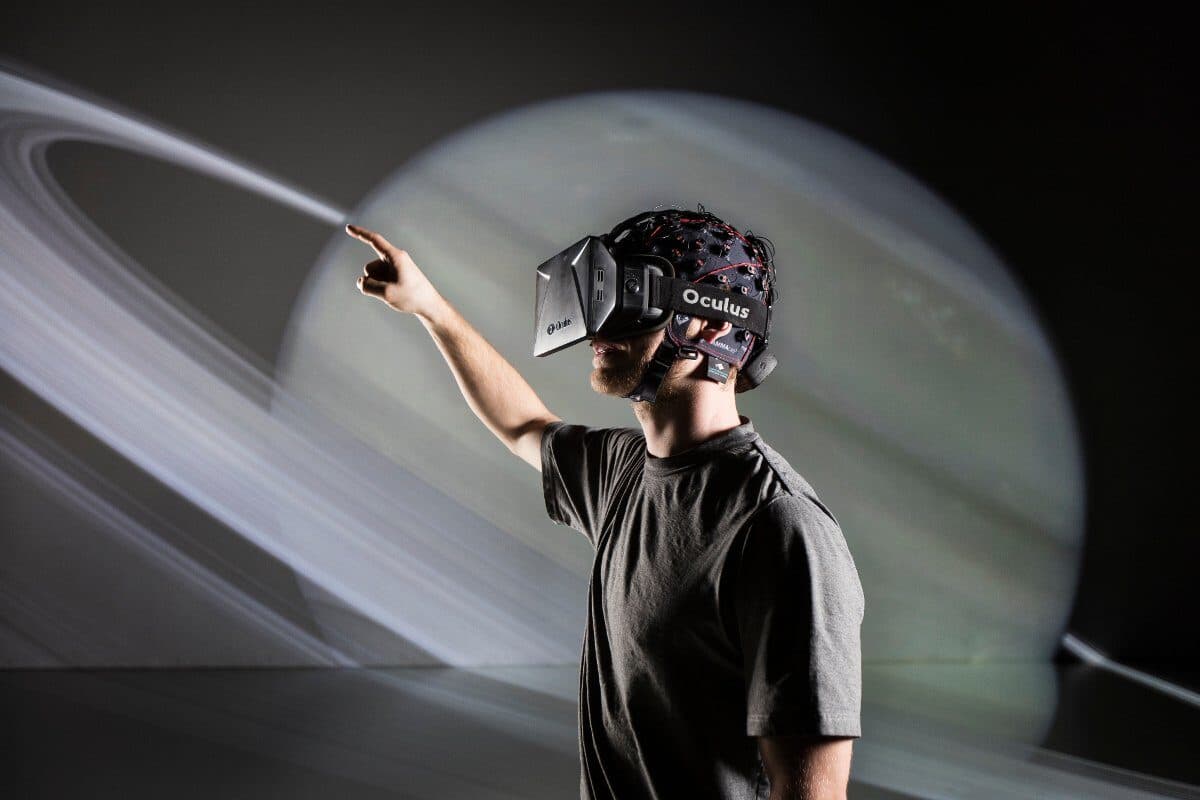
A man in an EEG cap and an Oculus Rift headset pointing at a projected planet
Why VR + EEG?

The bridge between the brain and a virtual world.

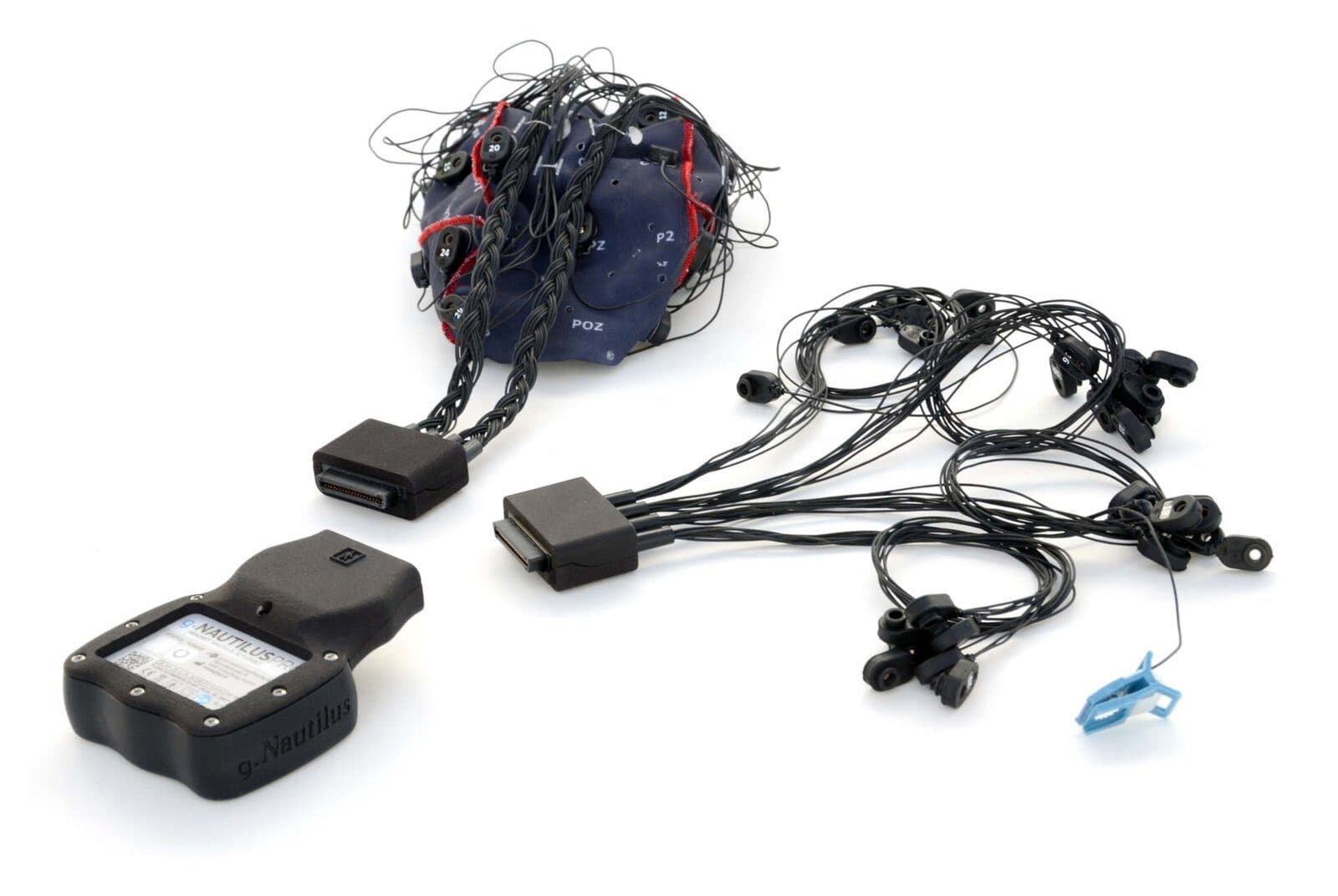
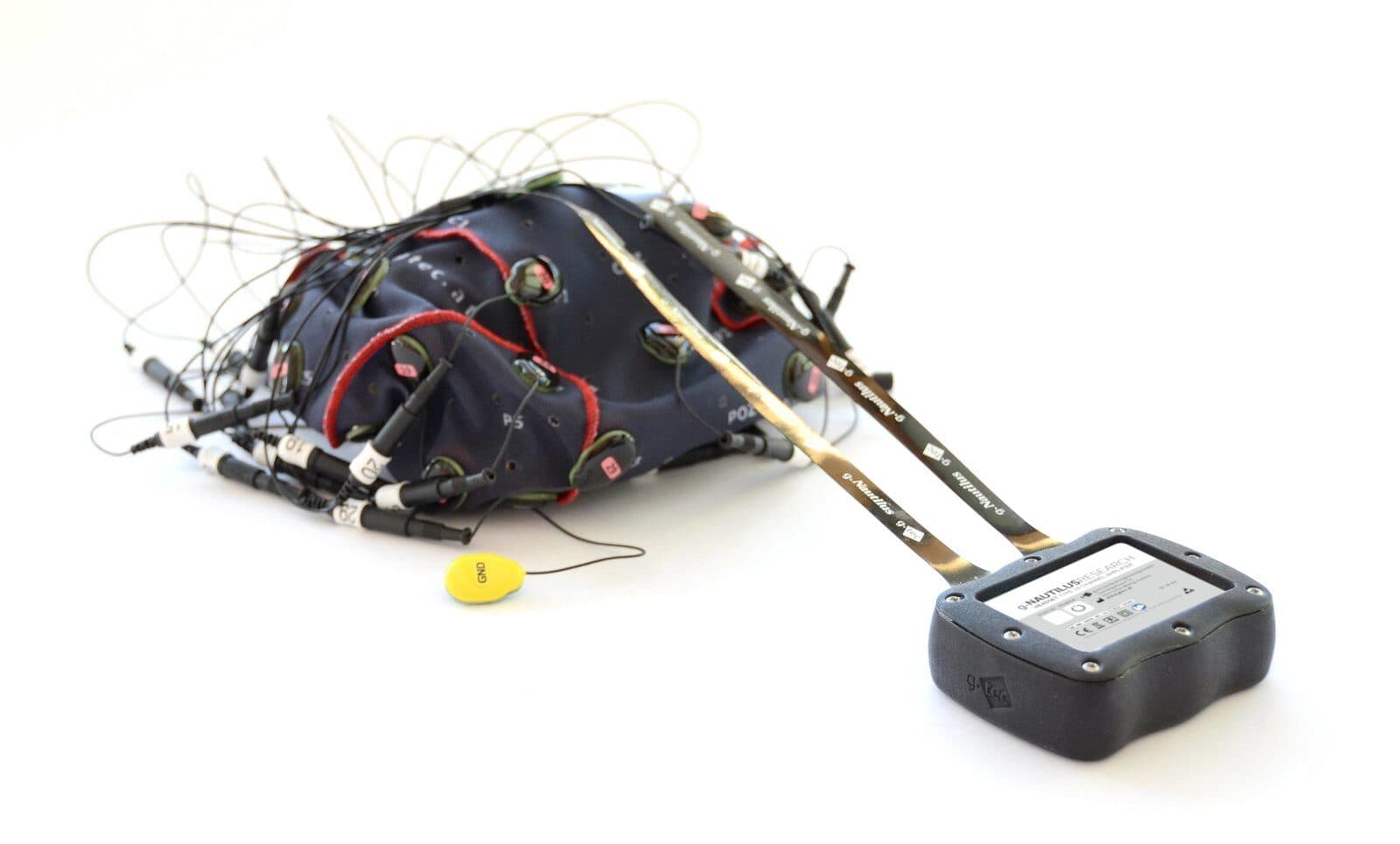
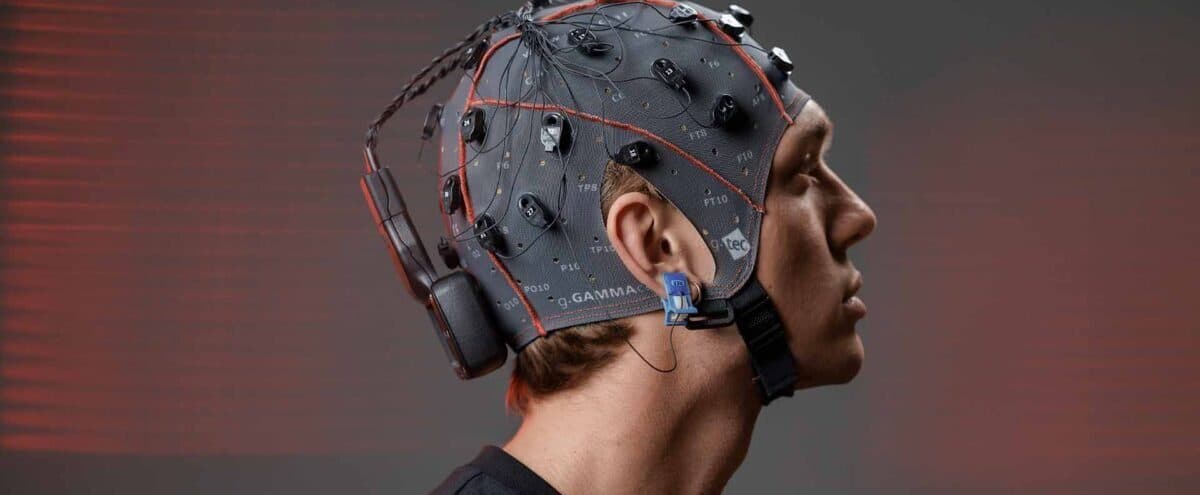
Virtual reality offers EEG research three things: high ecological validity, a fully controllable environment and experimental scenarios that are impossible in the real world. g.tec's wearable EEG systems can be used together with VR headsets (Oculus, HTC Vive, HoloLens).

The SOCI (Screen Overlay Control Interface) module in g.HIsys embeds BCI stimuli and feedback elements directly in VR applications built with Unity. P300, SSVEP and motor imagery paradigms run smoothly in VR, and the ready-made VR toolboxes can be set up within hours.
Embodiment and avatar control

Embodiment research with a virtual avatar.

Integrated with Unity, g.tec's BCI system lets users control virtual avatars with mental commands. Controlling an avatar's movement in the virtual environment through the motor imagery paradigm lets patients with restricted movement be actively present in a virtual world.

In research on presence and embodiment, EEG objectively measures how far the user identifies with the avatar. In stroke rehabilitation, combining VR avatar feedback with motor imagery is producing promising results.

  • Unity · SOCI · Motor Imagery
Ready-made VR toolboxes

VR control with P300, cVEP and SSVEP.

g.tec's BCI System environment includes three ready-made VR toolboxes. P300 Mastermind is a strategy game played in VR with the P300 paradigm. cVEP Space Traveller steers a virtual spacecraft with code-based BCI. SSVEP Smart Home controls a virtual smart home with the SSVEP paradigm.

Every toolbox comes ready in g.HIsys and can be customised in MATLAB/Simulink. Through the SOCI module, BCI stimuli and feedback are embedded directly in the Unity application, so the user completes the whole BCI experiment loop without taking off the VR headset.

  • P300 Mastermind · cVEP Space Traveller · SSVEP Smart Home
Clinical VR-BCI

VR-based motor rehabilitation.

VR offers neurorehabilitation a highly controllable and motivating environment. While patients repeat tasks in a safe virtual environment, an EEG motor imagery BCI monitors neural activity in real time and triggers feedback mechanisms such as FES (functional electrical stimulation).

Combining motor imagery with VR increases cortical plasticity and supports functional recovery.

  • Motor Imagery · FES · VR rehabilitation
Unicorn and Unity integration

BCI games, art and education.

The Unity Game Interface of Unicorn Hybrid Black is a ready platform for building VR games controlled by brain activity. Motor imagery, P300 and SSVEP paradigms can be integrated directly into 2D and 3D game environments in Unity. Studies on emotional architecture and adaptive VR design are also run with Unicorn BCI Core-8.

At the crossroads of fashion and technology, projects such as Anouk Wipprecht's “Kitty Ears” use wearable EEG and VR control to inspire art and education. At g.tec's BCI & Unity Masterclass, researchers from around the world presented VR-based BCI applications live.

  • Unity · Unicorn · BR41N.IO
Applications

Studies you can run with VR + EEG.

The main research and application scenarios supported by g.tec's VR-EEG platform.

Systems

The systems we recommend for this field.

Blog

Further reading

EEG and brain–computer interfaces
Contact

Let's build your VR-EEG lab.

Talk to our specialists about an EEG system that works with your VR headset, Unity integration and the choice of BCI toolboxes.

Request a quote

Call us +90 554 381 46 20Serving all of Türkiye · reply within 24 hours on working days